An personal observation on why mergers, acquisitions, spin-offs and divestitures remain among the corporate world’s favourite routes to growth.
Pick, almost at random, a sample of multinational corporations across very different industries.
Commence with the Murdoch media empire- recently revisited through the inevitably subjective lens of Netflix’s four-part documentary series Dynasty: The Murdochs (Netflix, 2026). Further expand on eg LVMH, Unilever, P&G, Mondelēz, Coca-Cola, Heineken, Informa, Galileo Global Education, Meta, Alphabet, Microsoft, Disney, Coty, BNP Paribas, Stellantis, Sanofi, Opella and Haleon. And so many more.
Whether the deal logic involves horizontal integration, vertical integration, product expansion or entry into new markets, the industries could hardly be more distinctive: Luxury, soap, biscuits, fizzy drinks, beer, flagship events, private universities and business schools, algorithms, cartoons, lipstick, banking, cars and medicine.

It does sound less like a peer group than a very diversified investment fund.
Nonetheless, closely zoom in on the corporate family trees or M&A playbook, almost like a circle of life, the pattern appears again and again: mergers, acquisitions, spin-offs and divestitures.
The official language is growth, innovation, focus, synergy and transformation. The less polished question is whether these moves are also designed to keep shareholder returns growing.

I think it would be too neat to call M&A the universal number-one strategy for corporate expansion. Companies also grow organically through innovation, partnerships and new-market development. Still, the scale is difficult to ignore. In some way, it’s established as a universal law of business expansion with speed. For instance, PwC’s 2026 mid-year outlook projects approximately 42,000 deals for the full year. Although 2026’s projected number is 13% fewer than in 2025, the combined value of around $4 trillion – 13% higher (Levy, 2026). Fewer deals. Much bigger bets. Is it because of VUCA or the AI race?
Ultimately, it’s quite safe to acknowledge the distinctive pattern and strategy: M&A remains one of the corporate world’s favourite shortcuts to scale.
1. Different Industries. The Same Growth Reflex.
What do these corporations have in common despite their distinctive industries?
They have learned that growth and innovation do not always need to be built from scratch. Sometimes they can be bought. One way or another: to accelerate returns, acquire capabilities, or reduce the risk posed by a disruptor. That threat may come from a rival fighting within a crowded red ocean or from a new entrant trying to create a blue one, to borrow Kim and Mauborgne’s strategy language (2004).
Sometimes a business can be merged. Sometimes its value can be unlocked by letting part of it go.
LVMH was itself created through a merger between Moët Hennessy and Louis Vuitton in 1987. Today, its portfolio spans more than 75 Maisons. Its stated model is not simply to own those Maisons, but to provide the resources they need while respecting their identities and independence.
Meta acquired Instagram and later WhatsApp (Meta, 2012, 2014). Disney expanded its storytelling portfolio through its acquisitions of Pixar, Marvel and Lucasfilm (The Walt Disney Company, 2015).
The pattern is not limited to consumer brands and technology. Galileo Global Education now connects 65 schools and universities across more than 110 campuses (Galileo Global Education, n.d.).
Informa has repeatedly reshaped its business through both purchases and disposals. Its corporate history records the acquisition of Tarsus and other specialist businesses alongside the divestment of its Intelligence portfolio (Informa PLC, n.d.).
An acquisition does not merely buy a company. It buys time.
It can also buy brainpower: expertise, judgement, creative capacity and organisational memory. These are intangible assets, but arguably among the most valuable.
Then come the more visible assets: brand trust, customer relationships, market access, data, intellectual property, distribution and infrastructure. These are expensive to acquire. They are often even slower to build.

Profit may be the headline. Speed is frequently the real attraction. Control is often the silent third motive.
2. Speed Has a Price. Buy to Build or Buy to Kill?
The advantages of M&A are easy to place on a presentation slide.
A company can enter a market faster. Add a new capability. Expand its customer base. Diversify revenue. Gain scale. Combine complementary products. Or acquire expertise before a competitor does.

All of this may be quicker than building from zero.
Then the deal closes, the champagne disappears, and integration begins.
The purchase price is only the entry ticket. Systems may not speak to one another. Processes overlap. Leaders compete for control. Key talent leaves. Customers become confused. The promised “synergies” slowly reveal the work hiding behind the word.
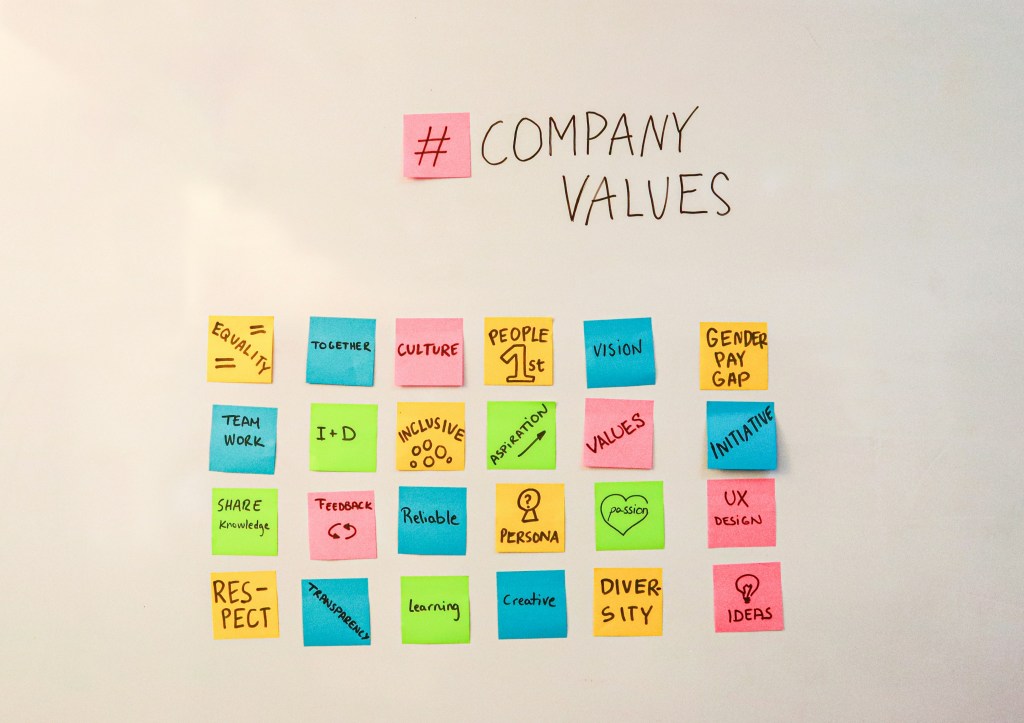
Culture may be the most underestimated cost.
Two balance sheets can be combined over a weekend. Corporate culture cannot. It reflects how work has been done, rewarded and trusted for years.
Adaptation is a process. Change management is work.
The famous line “culture eats strategy for breakfast” is commonly attributed to Peter Drucker. Yet the Drucker Institute found no evidence that he said it. Nor is it a Henry Mintzberg quotation (Martin, 2021).
The attribution is shaky. The warning is not.
McKinsey’s research on M&A culture identifies cultural friction and lack of fit as the most common reasons integrations fail to meet value-creation expectations (O’Loughlin et al., 2025).
This is the central M&A tension. A deal can create immediate scale while introducing years of operational complexity. It can open a new market while weakening a distinctive culture. It can reduce one strategic risk and quietly create another.
That is why the more captivating growth move may sometimes be the opposite of acquisition: divestment.
Consider Sanofi and Opella. In April 2025, Sanofi sold a 50% controlling stake in Opella to CD&R. Sanofi retained 48.2%, while Bpifrance took 1.8% (Sanofi, 2025).
This was not a clean goodbye. It was a redesign of the ownership architecture.
The move opened the box. It invited another shareholder to invest, cooperate and carry part of the risk. It gave Opella greater independence while allowing Sanofi to focus more sharply on biopharma. Sanofi also remained connected to Opella’s future value through a significant minority stake.
It is out-of-the-box thinking in a very literal corporate sense: open the ownership box, rearrange what is inside, and create space for both businesses to grow differently.
Of course, shared ownership does not mean equal control. Strategic freedom for one party can mean less influence for another.
No structure removes risk. It only redistributes it.
A useful parallel is Haleon. It is not a Sanofi rebrand. Haleon became an independent company when GSK demerged its consumer-health business in July 2022 (Haleon, 2022).

Different corporate route. Similar strategic logic: give a portfolio a clearer identity, sharper focus and its own room to grow.
3. Built to Sell or Built to Last?
This leads to the more provocative question.

Do we know whether a business is built to sell or built to last? When it is acquired, is it being invited into a larger family, absorbed into a corporate machine or quietly removed from the road?
LVMH represents a strong “buy to build” case. Its corporate model explicitly emphasises developing its Maisons while protecting their individual identities, autonomy and heritage.
Then comes a classic M&A cautionary tale: what exactly happened to Nokia?
More precisely, what happened to Nokia’s phone business after Microsoft bought it?
Microsoft acquired substantially all of Nokia’s Devices and Services business in 2014. In the following financial year, it recorded $7.5 billion in related phone-business impairment charges. Microsoft then sold its entry-level feature-phone assets in 2016 (Microsoft, 2015, 2016).
The acquired business was absorbed, written down and largely unwound. Nokia Corporation itself did not disappear, and the Nokia phone brand later continued through new licensing arrangements.
More importantly, this history does not prove that Microsoft bought the business to kill it. It shows that an acquisition can absorb a name, fail to realise its strategic thesis and retreat—without elimination necessarily being the original intention.
“Buy to kill” has a more precise meaning in competition research.
Cunningham, Ederer and Ma studied pharmaceutical acquisitions in which an incumbent bought an innovative target and then discontinued an overlapping drug project. Their conservative estimate classified 5.3%–7.4% of the acquisitions in their sample as “killer acquisitions” (Cunningham et al., 2021).
That distinction matters.
A brand can disappear because integration failed. Because operations were consolidated. Because the buyer wanted the assets but not the name. Or because a potential competitor was deliberately removed.
Those outcomes may look similar from a distance. Strategically, ethically and legally, they are not the same.
At first, “built to sell” and “built to last” sound like opposite ambitions. One suggests an exit. The other suggests endurance.
Nonetheless, M&A complicates the distinction.
A business built to sell still needs strong systems, loyal customers, credible economics and a culture capable of surviving scrutiny. Otherwise, it is merely well-packaged fragility.

A business built to last still needs to adapt. It may have to acquire new capabilities, merge with a stronger partner or divest a part that could grow better elsewhere.
Otherwise, “built to last” can slowly become “built to resist.”
Companies are not static monuments. They are living portfolios of people, capabilities, capital and choices.
Sometimes product or market expansion means adding. Sometimes it means combining. Sometimes, surprisingly, it means letting go.
Perhaps the real test is not whether a company was built to sell or built to last. It is whether it was built well enough to remain valuable through either future.
Yet one connected dot remains: what comes next?
M&A, like any business strategy, moves in waves. Globalisation widened the playing field. AI may now redraw it.
PwC argues that AI is already changing both where capital flows and how deals are executed from target screening and due diligence to valuation and value-creation planning (Levy, 2026). The technology can analyse more data and accelerate decisions.
Human judgement with instinct and cultural nuance still matters. Perhaps more than ever.
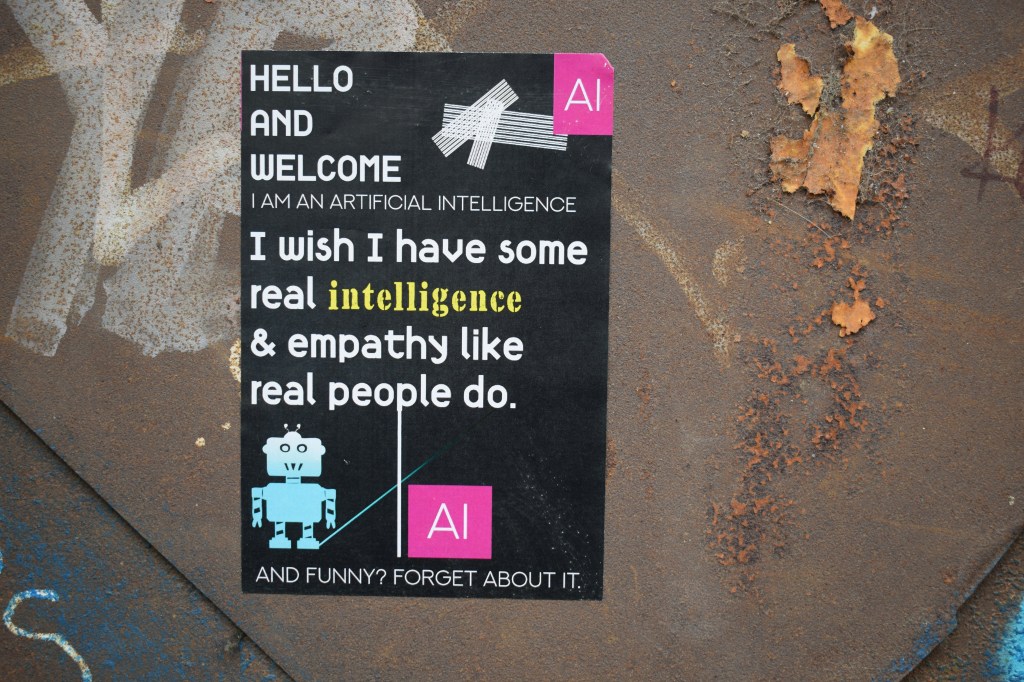
Will companies acquire AI capabilities to build faster? Will they buy emerging challengers before those challengers become impossible to ignore? Or will minority stakes, partnerships and shared-ownership models become more attractive than complete control?
And will AI improve corporate decision-making or simply help companies make bigger mistakes more quickly?
I am left wondering how the next phase will play out. Will AI help businesses build to last or make it easier to build to sell, buy to build and, sometimes, buy to kill?

References
Cunningham, C., Ederer, F., & Ma, S. (2021). Killer acquisitions. Journal of Political Economy, 129(3), 649–702. https://doi.org/10.1086/712506
Galileo Global Education. (n.d.). Our group. Retrieved July 25, 2026, from https://www.ggeedu.com/en/about-us
Haleon. (2022, July 18). Completion of the demerger and admission of shares in Haleon. https://www.haleon.com/news/press-releases/esg/2022/Completion-of-the-demerger-and-admission-of-shares-in-Haleon
Informa PLC. (n.d.). History. Retrieved July 25, 2026, from https://www.informa.com/about-us/our-history/
Kim, W. C., & Mauborgne, R. (2004, October). Blue ocean strategy. Harvard Business Review. https://hbr.org/2004/10/blue-ocean-strategy
Levy, B. (2026, June 23). Global M&A industry trends: 2026 mid-year outlook. PwC. https://www.pwc.com/gx/en/services/deals/trends.html
LVMH. (n.d.-a). History. Retrieved July 25, 2026, from https://www.lvmh.com/en/our-group/history
LVMH. (n.d.-b). Our model. Retrieved July 25, 2026, from https://www.lvmh.com/en/our-group/our-model
Martin, R. L. (2021, September 27). Why do strategy, anyway? Medium. https://rogermartin.medium.com/why-do-strategy-anyway-355e0e760861
Meta. (2012, April 9). Facebook to acquire Instagram. https://about.fb.com/news/2012/04/facebook-to-acquire-instagram/
Meta. (2014, February 19). Facebook to acquire WhatsApp. https://about.fb.com/news/2014/02/facebook-to-acquire-whatsapp/
Microsoft. (2015). Annual report 2015. https://www.microsoft.com/investor/reports/ar15/index.html
Microsoft. (2016, May 18). Microsoft selling feature phone business to FIH Mobile Ltd. and HMD Global, Oy. https://news.microsoft.com/source/2016/05/18/microsoft-selling-feature-phone-business-to-fih-mobile-ltd-and-hmd-global-oy/
Netflix. (2026). Dynasty: The Murdochs [TV documentary series]. https://www.netflix.com/title/81712688
O’Loughlin, E., Kordestani, K., Kaetzler, R., & De Blieck, E. (2025, February 19). Why managing culture is critical for value creation in M&A. McKinsey & Company. https://www.mckinsey.com/capabilities/m-and-a/our-insights/why-managing-culture-is-critical-for-value-creation-in-m-and-a
Sanofi. (2025, April 30). Sanofi and CD&R close Opella transaction, create global consumer healthcare leader. https://www.sanofi.com/en/media-room/press-releases/2025/2025-04-30-11-00-00-3071167
The Walt Disney Company. (2015, October 14). Toy Industry Association names Robert A. Iger as 2016 inductee into Toy Hall of Fame. https://thewaltdisneycompany.com/news/toy-industry-association-names-robert-a-iger-as-2016-inductee-into-toy-hall-of-fame/
 The Hummingbeez
Leave a comment