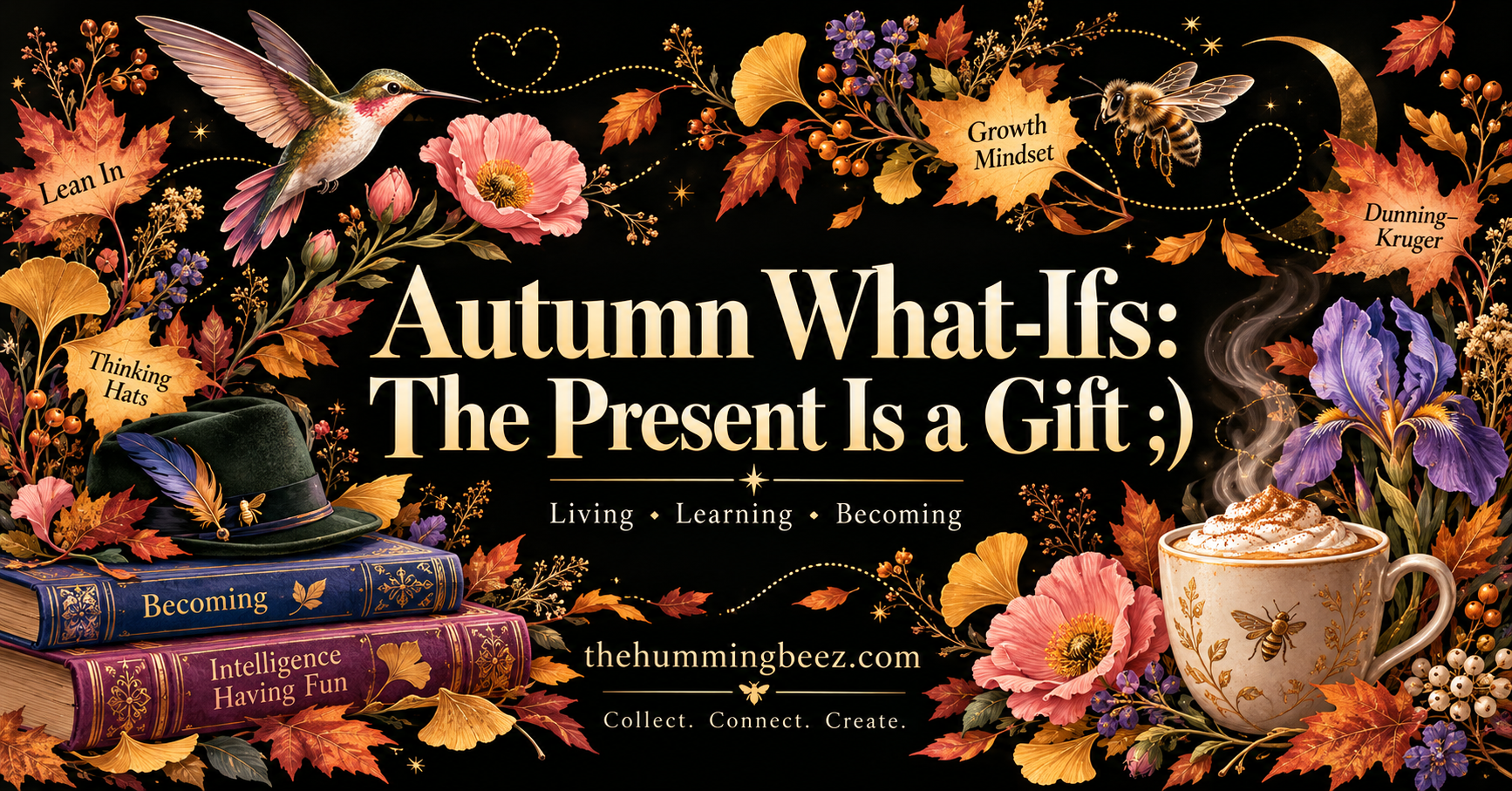
Two films and a series, three cultural lenses, and a little reflection on living in the present without giving up on growth.
As autumn approaches, whether in Amsterdam or Paris or further up north, it can bring nostalgic what-ifs, or even déjà vu. At least, that is how I’d very much like to embrace it: with a little grace, a warm cup of tea and a little magic, watching the leaves slowly, quietly transform from the fresh green of summer into the thoughtful, deliberate golden shades of fall.
Cozy season alert!

Two films and a series have brought a little reflective enlightenment about living truthfully in the present moment. Disclaimer: not the “in the heat of the moment” kind 😉 Or, at least, they’ve lifted my mood as the sunlight fades a little earlier each day.
Through three different cultural perspectives – American, Dutch and French- and colourful human lenses, they brought me back to a common question: how much of the life in front of us do we miss by wondering about the one we could have lived if we’d made a different choice?
A little autumn reflection, then, for us humans living through this speed-of-light moment in history.
1. Look Both Ways:
What if a different life wasn’t necessarily a better one?
The moral of the story, to me, is deeper than its first impression of kinda-cheesy entertainment. Again, “don’t judge a book by its cover.” How difficult that can be nowadays! 😉

The film follows two parallel versions of a young woman’s life after graduation, when a pregnancy test opens up two possible paths: one in which she becomes a mother, and another in which she pursues her career in Los Angeles (Villarreal, 2022). There is the life she had imagined and dreamed of, and the “oopsy non-daisy thing” that happened.
But neither version escapes the ups and downs, the lost and found, or the moments when turning things around seems impossible. What stayed with me was the flair of optimism: a meaningful life can still take shape when the five-year plan takes a zigzag route.
Thus, the question is: what would you do differently if you knew the journey could still lead somewhere worthwhile, even if it didn’t follow the route you had imagined?
Whenever things go south, what happens if we allow ourselves to look outside the box, beyond the boundary, take a few steps back? Or even bravely put on a different thinking hat? Edward de Bono’s Six Thinking Hats offers a structured way to consider a situation through different modes of thinking, including taking account into others’ feelings, evaluate caution and risk, and exploring possibilities (De Bono Group, n.d.).
Perhaps the journey doesn’t have to be as unbearable as it sometimes seems in our heads.
Not rocket science, but an old idea that feels newly true whenever life asks us to apply it. Isn’t that part of the point of philosophy?
And another question brings me back to Oprah’s conversation with Simon Sinek about optimism and relationships. Doesn’t what matters at the end is who you are sharing that journey with (Winfrey, 2026)?
We cannot choose every turn in the road, but perhaps some optimism can make the ride more bearable for ourselves and those beside us. Easier said than done, I suppose, but still worth considering?
P.S. The same thought comes to mind with anxiety around AI or the future. Fei-Fei Li’s human-centred perspective resonated with me: the conversation can become caught between extremes, from apocalypse to utopia, leaving less room to discuss human choices and responsibilities (Hoffman & Finger, 2025).
I would like to believe that pushing scientific boundaries should improve human life. I really hope so! But that also depends on what we choose to build and how we use it. Perhaps uncertainty is a reason to stay involved.
2. Taal Is Zeg Maar Echt Mijn Ding
— Language is so my thing—
What if the ordinary is already worth noticing?
Just like an Ed Sheeran melody, this Dutch film lures you elegantly into “normal contemporary life,” with its own uitdagingen: challenges that always present themselves, with an invitation or not 😉
Its starting point is a writer who wants to leave her job, but stays when an assignment pairs her with a charming photographer (Netflix). What I took from the story reaches beyond that premise.
What if something you’ve been wondering about, or looking for, is already right in front of you, in daily, normal life?
In terms of work, there are always the entanglements of working for your passion or working for the whole life package. The work itself matters, of course. So do the people, the rhythm, and the life it allows us to live outside it.
In terms of love and family, rather than “the grass is always greener elsewhere,” what stayed with me was how beautifully the story painted solidity, sincerity and living up to promises made.
Appreciating what is here doesn’t mean we have to stay wherever we are. But perhaps it helps to notice what is good before assuming that “elsewhere” holds everything we’re missing.

As the seasons change every year, what feels like an upgrade or a downgrade may also depend on how we navigate through it.
Still uncertain about any absolute answer, I find the perspective of gradient descent remarkably applicable-as an analogy. We make small adjustments, learn through trial and error, and pay attention to what those learning curves are telling us. Life is rather less tidy than an equation, though. There is no single number that tells us we’ve hit the jackpot or found “the one.”
That is where I see a connection with Carol Dweck’s growth mindset: believing our abilities can develop through learning, consistent practice, useful tactics and constructive feedback, at the same time being willing to change how we approach a challenge (Dweck, 2006; Stanford University, n.d.).
And yet, not everything needs an optimiser. Perhaps creativity deserves a little room to play, too. As Albert Einstein famously coined: “Creativity is intelligence having fun “

Sometimes, perhaps living in the present means enjoying the tea, the company and an ordinary afternoon. We can believe in our potential, working toward the goals regardless of the scattered distractions.
P.S. Beyond the familiar boxes of IQ and EQ, there are other ways to think about human abilities. Howard Gardner’s theory of multiple intelligences offers one lens, including musical and spatial abilities (Gardner, 2013). It is a theory, rather than a settled map of separate intelligences. Still, it makes me wonder what we overlook when we recognise only a narrow version of being “smart.”
3. Mes amis, mes amours, mes emmerdes:
— My friends, my loves and my hassles—
Who stays when life becomes less graceful?
At first, I was just trying to find an alternative to my all-time favourite, Friends. Something similar, but different 😄
This French series follows friends who have known one another for more than twenty years, sharing joys and difficulties along the way (TF1, n.d.).
To me, it showcases friendship, solidarity, and something of the spirit of liberté, égalité, fraternité. Especially that last word.
I found it a bit less dramatic than Dix pour cent, with quite a good balance of optimism, reality and aspiration. Also, a lovely way to explore the French language and culture, though with a bit of stereotyping, as always with series and films.
What stayed with me was the solidarity: sharing the joys, but also being there when life becomes less graceful. The friendships have history, and that history has room for disagreements, tolerance, accepting flaws, and difficult conversations and yet, still choose to show up again.
Perhaps who we share the journey with matters just as much in the ordinary moments as in the difficult ones. A shared meal, a familiar joke, someone you can lean on and who leans in when it matters.
A little borrowing of Sheryl Sandberg’s title Lean In, here, beyond its focus on women, work and leadership (Sandberg, 2013). And a nod to Michelle Obama’s Becoming (Obama, 2018): someone who remembers the earlier versions of you while making room for who you are becoming, every day.
And perhaps that is why these stories found me this autumn. They left me thinking about the plans we make, the ordinary things we overlook, and the people who show up through the parts we couldn’t have planned.
So, the what-ifs are still there as ever. So are the changing leaves, the learning curves, and the people with whom we get to share this season.

Let’s give this version of life a little more warmly special care. Preferably over a pumpkin spice latte 😉 or magic coffee.
References
De Bono Group. (n.d.). Six Thinking Hats. https://www.debonogroup.com/services/core-programs/six-thinking-hats/
Dweck, C. S. (2006). Mindset: The new psychology of success. Random House.
Gardner, H. (2013, October 16). Multiple intelligences are not learning styles. Harvard Graduate School of Education. https://www.gse.harvard.edu/ideas/news/13/10/multiple-intelligences-are-not-learning-styles
Hoffman, R., & Finger, A. (Hosts). (2025, January 15). Fei-Fei Li on spatial intelligence and human-centered AI [Audio podcast episode]. In Possible. https://www.possible.fm/podcasts/feifei/
Netflix. (n.d.). Taal is zeg maar echt mijn ding. https://www.netflix.com/nl/title/81435978
Obama, M. (2018). Becoming. Crown.
Sandberg, S. (2013). Lean in: Women, work, and the will to lead. Alfred A. Knopf.
Stanford University. (n.d.). Growth mindset and enhanced learning. Teaching Commons. https://teachingcommons.stanford.edu/teaching-guides/foundations-course-design/learning-activities/growth-mindset-and-enhanced-learning
TF1. (n.d.). Mes amis, mes amours, mes emmerdes… TF1+. https://www.tf1.fr/tf1/mes-amis-mes-amours-mes-emmerdes
Villarreal, R. (2022, August 17). “Look Both Ways”: Everything you need to know about this dramedy. Netflix Tudum. https://www.netflix.com/tudum/articles/look-both-ways-release-date-cast-news
Winfrey, O. (Host). (2026, October 1). The optimism we all need right now with Simon Sinek (No. 109) [Audio podcast episode]. In The Oprah Podcast. https://podcasts.apple.com/au/podcast/the-optimism-we-all-need-right-now-with-simon-sinek/id1782960381?i=1000792536884
Leave a Reply